
F1’s 2026 aero revolution: how active wings will replace DRS
After 15 years of flap-and-pass overtakes, DRS bows out in 2025. From 2026, active front and rear wings plus a push-to-pass electric ‘manual override’ will reshape how drivers attack, defend and save energy – and could redefine what wheel-to-wheel racing looks like in Formula 1’s new hybrid era.
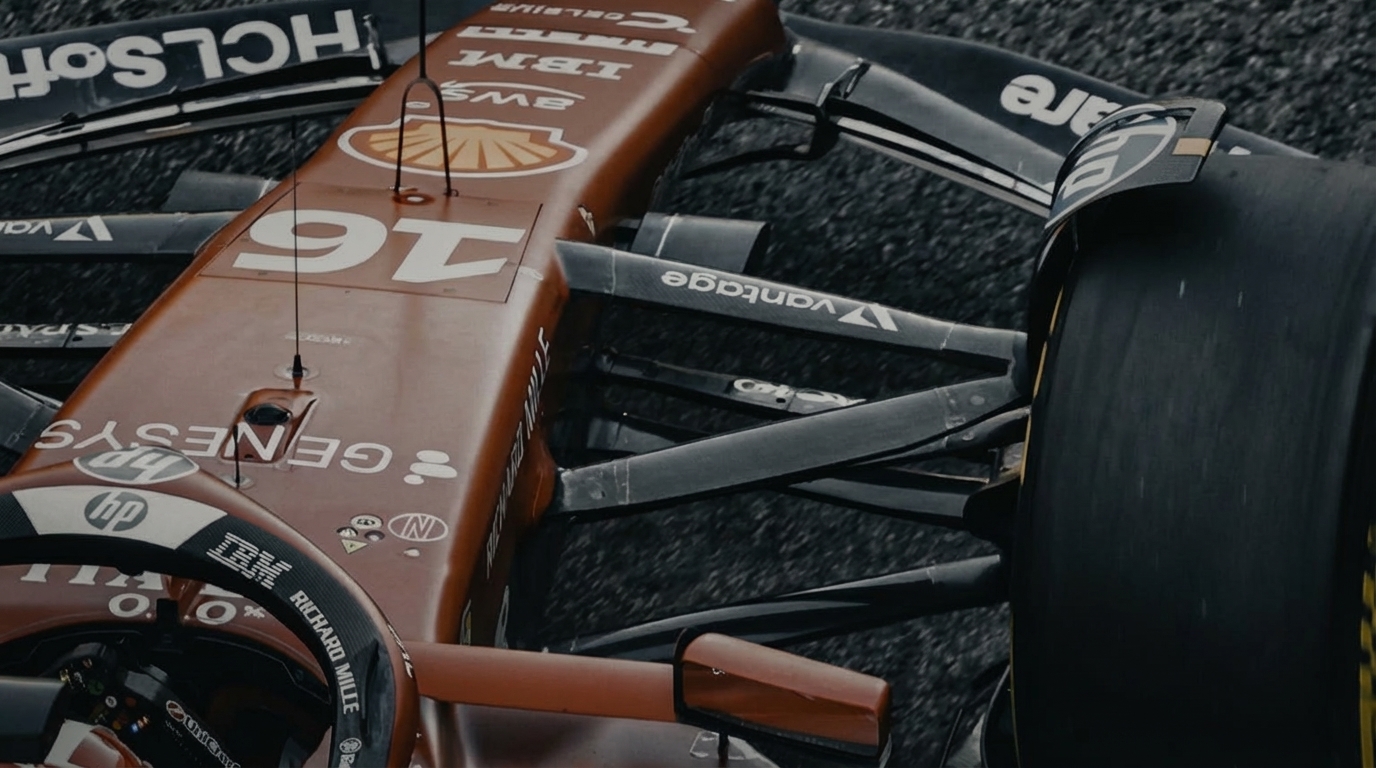
Under the Abu Dhabi floodlights, as the field fanned out into Turn 1 for the final race of 2025, there was a familiar metallic clatter: rear-wing flaps snapping open as DRS boards flashed past. It was the last time we’ll hear that sound in a Grand Prix. From 2026, the flap-and-pass era ends – and Formula 1 rolls the dice on the most radical aero rethink since ground effect returned.
The FIA’s new rulebook doesn’t just tweak endplates and diffusers. It rips out DRS entirely and replaces it with a moving, shape-shifting car. Front and rear wings will pivot between two states – high-downforce Z-mode for the corners and low-drag X-mode for the straights – while a battery-driven ‘manual override’ button gives the chasing driver an electrical slingshot in place of a DRS flap.
On paper, it’s audacious. The 2026 cars will be shorter and narrower, with a minimum weight of 768kg, around 30kg lighter than today’s machines. Downforce is trimmed by about 30% and drag by a massive 55%, according to the FIA’s own figures, all to make a new power unit concept work: roughly 50/50 between internal combustion and a beefed-up MGU-K delivering 350kW of electric shove.
"With this set of regulations the FIA has sought to develop a new generation of cars that are fully in touch with the DNA of Formula 1 – cars that are light, supremely fast and agile," said FIA single-seater technical director Nikolas Tombazis when the package was unveiled. He called it the ‘nimble car’ concept – and active aero sits at its core.
In X-mode, flaps in the three-element rear wing and two active front-wing elements rotate to a reclined, low-drag angle. Air spills through rather than piling up, the car punches a smaller hole, and crucially the hybrid system doesn’t waste its charge just forcing a dirty brick through the air. In Z-mode, those same elements snap back up, loading the tyres for braking zones and long, loaded corners. Drivers will trigger the switch via a steering-wheel button, but only in pre-defined zones where the FIA judges extra speed to be safe.
That philosophy is what separates 2026 from DRS. As the FIA’s head of aerodynamics Jason Somerville explained, "Typically, DRS is an overtaking aid, and you grant DRS when you're within one second of a lead car at specific points. With the 2026 car we'll be giving the drivers the ability to switch between the high downforce and low drag modes irrespective of any gaps." In other words, X-mode is for everyone, every lap – a standard tool like brake bias, not a bonus for the hunter.
If both cars can shed drag at will, where does the extra punch for overtakes come from? That’s where the new push-to-pass style manual override steps in. The 2026 power unit will taper the leader’s electrical deployment after around 290km/h, bleeding away to zero by roughly 355km/h. A following car within one second will be allowed to hit override, keeping the full 350kW of MGU-K power up to about 337km/h, plus an extra 0.5MJ of stored energy to burn down the straight. Jan Monchaux, the FIA’s technical chief, summed it up simply:
"However, the logic will be the same: I'm close enough to another car, I am given an extra amount of energy for that one lap, which I can deploy any way I want."
— Jan Monchaux, speaking to Motorsport.com
Instead of timing your DRS detection perfectly and hoping to break free of a DRS train, 2026 racing will be about managing an invisible energy budget. Use override aggressively to complete an overtake before the pit window and you might be prey later in the stint when your battery is on the edge and you’re forced to lift and coast. Botch your harvesting in traffic and the rival you undercut might rocket back past you in a place no one ever passed before.
All of this only works if the fundamental aero makes following easier. Tombazis admits the current ground-effect era slipped backwards as teams discovered outwash tricks and floor details that rebuilt the dirty air problem. For 2026, the FIA has flattened the floor, tamed the diffuser and simplified wings and brake ducts to keep the wake compact and cleaner. The target is that a car 20 metres behind retains around 90% of its downforce – better than the early 2022 numbers and far ahead of the pre-2022 high-downforce monsters.
"We believe that the start of the new cycle will be more like 90% or something like that. So we believe it’s going to be better than it’s ever been."
— Nikolas Tombazis, speaking to RaceFans
Independent CFD work isn’t entirely unanimous. Race technology outlet Raceteq’s simulations of 2026 ‘straightline mode’ – effectively X-mode – suggest that while drag falls sharply, the wake behind the car is pushed lower and spread wider. That could blunt the slipstream for a following car even as it reduces turbulence. The FIA’s bet is that the combination of higher baseline downforce in the wake and the electric override button will outweigh any slipstream loss.
We’ve already seen a rough sketch of this future. At the post-season test in Abu Dhabi, teams ran mule cars with prototype front-wing actuators, the upper elements snapping open on the straights. From the pit wall you could hear the note of the V6s change as drag bled away, the cars surging that little bit harder towards Turn 8, even on development tyres. It was a crude first draft, but it proved the basic concept: front and rear wings can move together without making the car undriveable.
Drivers, too, are starting to think in terms of energy chess rather than pure DRS drag races. Williams’ Alex Albon, looking across to Formula E, warned that brains may matter as much as bravery:
"It's not going to be that extreme, but there will be an element of the drivers who have the brain capacity to understand and facilitate all these demands will go well."
— Alex Albon, speaking to Sky Sports
George Russell, meanwhile, is banking on the unpredictability:
"I think you will see more overtakes next year, but more overtakes in obscure locations – in locations where we've never seen overtakes before… I think the 2026 regs will offer better racing."
— George Russell, speaking to Sky Sports
Not everyone is convinced. Team bosses quoted by ESPN worry that cutting so much downforce will drag cornering speeds – and F1’s aura – uncomfortably close to junior series, even if Tombazis insists final cars will end up only one to two seconds slower than today. Others fear that prescriptive aero boxes will lock in a single design philosophy and that, once again, teams will claw back outwash and wake problems long before 2030.
Yet this is F1’s pattern. The refuelling ban, the double diffuser, the first DRS arms race, the 2022 ground-effect reset – each time the sport has torn up its own rulebook, it has written another chapter in the endless struggle between airflow, tyre grip and human ambition. Active aerodynamics and electric push-to-pass are simply the latest tools.
Will they finally kill the dreaded DRS train and turn energy management into a new kind of late-braking drama, or just give us a different flavour of artificial boost? We won’t truly know until the first time a 2026 car blasts out of the final corner, wings flattened, battery armed, when the lights go out on that new era and the driver behind takes a breath, presses the button… and finds out if the future of racing is fast enough.
Key Facts
- DRS will be removed from Formula 1 races from 2026, ending the rear-wing flap overtaking aid first introduced in 2011.
- New 2026 cars use active front and rear wings with two modes: high-downforce Z-mode for corners and low-drag X-mode for straights.
- An electrical ‘manual override’ mode will replace DRS as the chase-car advantage, giving a following driver extra MGU-K power and 0.5MJ of additional energy.
- FIA simulations target around 30% less downforce and 55% less drag, plus roughly 90% of clean-air downforce available to a car following at 20m.
- Teams and independent analysts have raised concerns over reduced cornering speeds and possible slipstream loss, even as the FIA predicts better racing.
Sources
- A New Era of Competition: FIA showcases future-focused Formula 1 regulations for 2026 and beyond — FIA
- EXPLAINED: From more agile cars to 'X-mode' and 'Z-mode' – unpicking the 2026 aerodynamics regulations — Formula1.com
- How F1’s new active aero will work in 2026 as DRS is dropped — Motorsport.com
- How F1 2026's new active aero will work without DRS — Motor Sport Magazine
- More battery, less aero: How 2026 regulations will affect F1 — ESPN
- Why the FIA believes its 2026 rules will significantly improve F1’s ‘dirty air’ problem — RaceFans
- F1 2026's straightline mode will slash drag - with one major catch — Raceteq
- F1 2026: What are the new regulations, engine changes and how will the racing be with no DRS — Sky Sports
- Everything we learned from F1's first '2026' test — The Race