
Speed Capped, Future Unleashed: Inside F1’s First 2026 Mule-Car Trial in Abu Dhabi
At Yas Marina, F1’s first real-world taste of 2026 came via mule cars, slimmer Pirellis – and an artificial 300km/h ceiling on the straights. Inside the test that’s quietly shaping the next era.
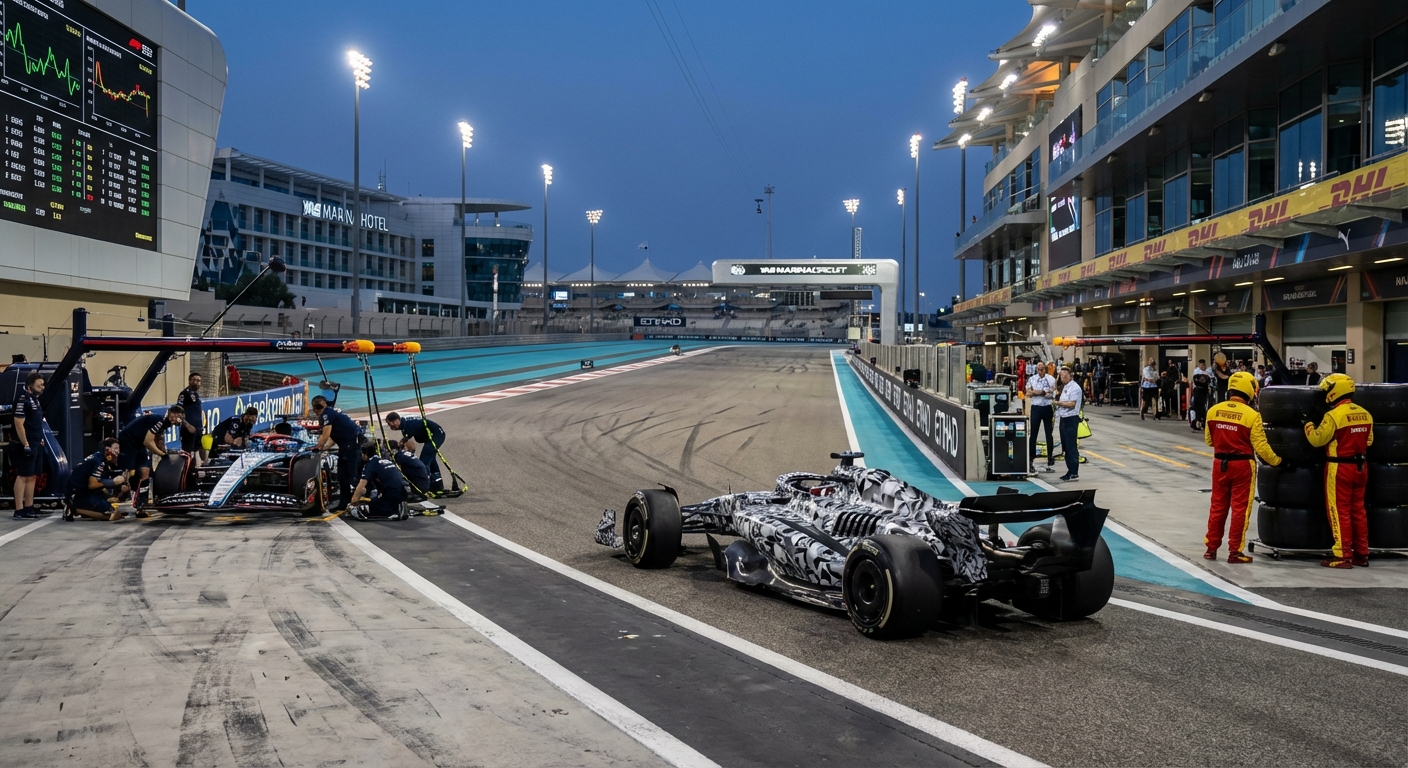
The final echoes of the 2025 Abu Dhabi Grand Prix had barely faded when Yas Marina lit up again – not for glory, but for the future. On Tuesday, the paddock was buzzing as ten disguised “mule cars” rolled out, wearing slimmer Pirelli tyres and shackled by a straight‑line speed limit. This wasn’t about lap records. This was Formula 1’s first true, on‑track rehearsal for 2026. When the lights went out for the all‑day group test, every team split its garage in two. One side ran a conventional 2025 car for a young driver; the other prepared a hacked‑down mule: reduced‑downforce wings, revised suspension and those narrower 18‑inch tyres designed for the all‑new regulations. Race drivers took the wheel of the mules, feeding Pirelli and the FIA precious data about how the new constructions behave when the cars are stripped of downforce and drag. But there was a twist. These 2025-based mules still only have rear‑wing DRS, not the front‑and‑rear active aero the 2026 rules promise. Open the rear flap and you release drag and load at the back, while the front stays planted – exactly the opposite balance of what’s coming. To avoid over‑stressing the front tyres and skewing the data, Pirelli and the teams agreed a straight‑line cap of around 290–300km/h, with DRS used far more aggressively across four zones to mimic the constant switching between ‘cornering’ and ‘straight‑line’ modes that will define the new era. “We said, ‘Let’s run lower downforce overall and put a speed limit on, otherwise we just overload the front,’” explained Pirelli motorsport boss Mario Isola. “If you look at the laptime it’s probably not fully representative. But it’s consistent. At least we have the consistency across different tests to compare the results.” Consistency matters when you’re designing tyres for cars that don’t yet exist. Teams’ downforce forecasts for late‑2026 have varied wildly, so Pirelli has gone with a wider‑than‑usual dry range from C1 to C5 – abandoning an ultra‑soft C6 – and validated its construction across 12 mule‑car sessions from Barcelona to Mexico City before this Abu Dhabi finale. At Yas Marina, those compounds finally met all 10 teams on the same day, with everything from C2 to C5 available, plus intermediates if the desert skies misbehaved. The headline work wasn’t choosing which tyres survive – the 2026 range is already set – but understanding which circuits can safely handle the softer rubber, how aggressively teams can undercut, and how the new dimensions respond to long runs in lower‑drag trim. Speed‑limited or not, those laps will decide whether 2026 Sundays are one‑stop chess matches or multi‑stop slugfests. This is the moment that could define the season before a single 2026 car turns a wheel. The mule cars can’t yet howl down the straights at full power, and active aero remains confined to CAD files and wind tunnels, but on a cool Abu Dhabi evening the sport finally felt the first tangible grip of its next chapter. The battle for the 2025 titles is over. The race to master 2026 has just left the pits.
Key Facts
- Abu Dhabi hosted F1’s first full‑field mule‑car test tailored to the 2026 regulations, using narrower 18‑inch Pirelli tyres.
- Pirelli and teams agreed a straight‑line speed cap of roughly 290–300 km/h on mule cars to prevent front‑tyre overload without 2026‑style active aero.
- DRS was used on four straights at Yas Marina to imitate the frequent aero‑mode switching that 2026 active aerodynamics will bring.
- Pirelli’s 2026 range is locked in at five dry compounds (C1–C5), validated through a year‑long global mule‑car programme.
- The Abu Dhabi test focuses on mapping compound choices and race strategies for 2026 rather than changing the tyres’ core design.
Sources
- Why F1's 2026 mule car test will have a speed limit — The Race
- Important 2026 Pirelli F1 tire test Tuesday in Abu Dhabi — AutoRacing1
- The range of compounds for the 2026 season has been set — Pirelli
- In Abu Dhabi for a first step towards the F1 of the future — Pirelli
- Important 2026 Pirelli F1 Tire Test in Abu Dhabi This Tuesday — BVM Sports