
FIA hands IndyCar a superlicence boost – and opens a wider door to F1
From 2026 the FIA will award significantly more F1 superlicence points to IndyCar’s top finishers, elevating America’s premier single-seater series to the clear No.2 route to Formula 1 and easing the path for stars like Colton Herta – even as questions over the system itself refuse to go away.
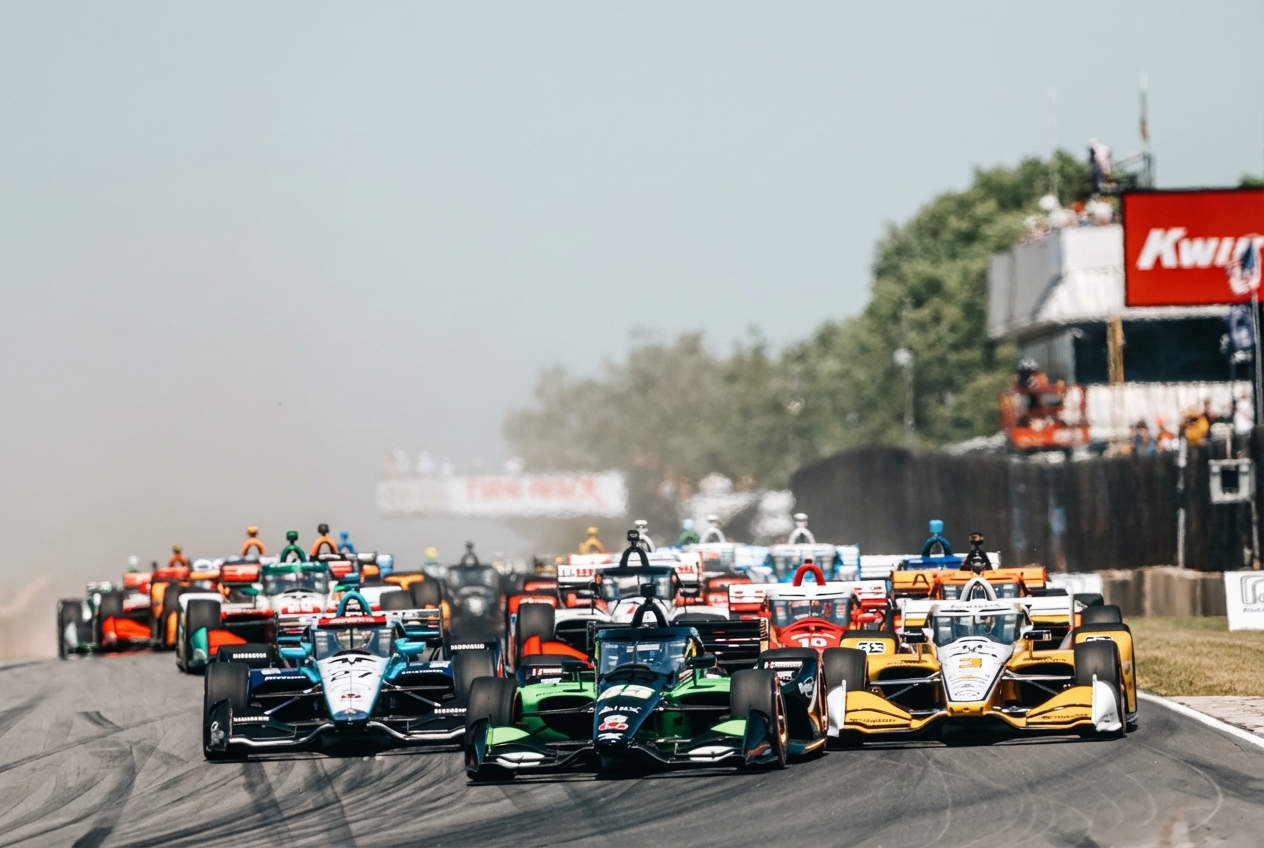
The news broke not with the scream of a V6 or the thunder of an IndyCar pounding over kerbs, but in the quiet wording of an FIA World Motor Sport Council bulletin. Yet behind those dry lines, a door to Formula 1 just swung noticeably wider for America’s best.
From 2026, the FIA will award significantly more F1 superlicence points to IndyCar’s top finishers, finally acknowledging – in its own bureaucratic language – that the series is far closer to F1 than to a junior category. For drivers chasing the 40-point threshold that unlocks a grand prix seat, the numbers have changed in a way that really matters.
Until now, IndyCar’s top 10 in the championship earned 40-30-20-10-8-6-4-3-2-1 superlicence points. Under the revised scale approved in Uzbekistan this week, that becomes 40-30-25-20-15-10-8-6-3-1 from first to 10th place in the standings, with the positions from third to ninth all boosted, some of them doubled. RACER and RaceFans both report that the total points on offer across the top 10 jumps from 124 to 158, still short of Formula 2 but no longer an embarrassment for America’s premier open-wheel series.
Walk down a pitlane in St Petersburg or Long Beach next year and that change won’t be visible to the naked eye. But it will hang in the air like the tang of spent ethanol and hot carbon – a promise that a hard-fought IndyCar campaign can now carry a driver all the way to F1’s front door instead of leaving them parked one step short.
The flashpoint, inevitably, is Colton Herta. His stalled F1 move has been the living, breathing case study for IndyCar’s old under-valuation. Reuters notes that the Californian – a nine-time IndyCar winner – never scraped together enough points from his US results to qualify, forcing Cadillac to pair its 2026 F1 entry with a detour into Formula 2. Under the new system, PlanetF1 and RACER calculate that Herta’s past IndyCar seasons would still leave him one point shy, but crucially much closer to the promised land.
Motorsport.com’s Joey Barnes, via Yahoo, captured the mood in the paddock through Arrow McLaren boss Tony Kanaan, who has seen both sides of the Atlantic up close.
“No one doubts that IndyCar is one of the most competitive racing series in the world, and I’m glad the FIA is acknowledging that by increasing the points to be more comparable to F2.
— Tony Kanaan, speaking to Motorsport.com
“It’s good news for IndyCar and good for the drivers in the series if they do want to race in F1. An IndyCar driver shouldn’t need to go to a feeder series to prove they’ve got what it takes to compete in any other series.”
— Tony Kanaan, speaking to Motorsport.com
That last line hits the nerve. For years, the superlicence table all but strong-armed IndyCar hopefuls into Europe’s junior ladder if they harboured F1 dreams. RaceFans highlights the disparity starkly: in 2025, 201 points were available to the top 10 in F2, just 124 in IndyCar, and even Formula 3’s tally exceeded the American series. Now, with the new 40-30-25-20-15-10-8-6-3-1 distribution, IndyCar is firmly installed as F1’s second-best points mine – behind F2, ahead of F3 – without pretending to be a mere feeder championship.
The change is also a quiet course correction in the politics between Europe and America. For a sport with three races in the United States and an 11th team backed by Cadillac arriving, the absence of a single American driver on the grid had become increasingly awkward. Reuters underlines that the FIA’s own wording speaks of “the growing significance of the category” – a diplomatic way of admitting that the previous weighting undervalued the speed, racecraft and knife-edge strategy required to win on ovals, road courses and street circuits from Texas to Toronto.
On the numbers alone, this is a masterclass in incremental reform rather than revolution. An IndyCar champion still bags 40 points – the magic one-season ticket – and second place stays at 30. It’s the midfield where the FIA has gone hunting for value: third now yields 25 points instead of 20, fourth doubles from 10 to 20, fifth jumps from 8 to 15, and so on down to ninth. Yahoo’s breakdown shows that if this table had applied earlier in the decade, drivers like Pato O’Ward and Scott McLaughlin would have cleared the threshold within three seasons instead of living in permanent superlicence limbo.
What doesn’t change may be just as telling. Road & Track points out that the revision is not retroactive, and even with the new maths, Herta’s historic IndyCar record would still leave him one point short of 40. The message from the FIA is clear: past battles stay in the books; from 2026 onward, the game is fairer – but the bar is the same.
And the debate over the system itself rumbles on. Commenters quoted by RaceFans and analysis from Road & Track argue that tying eligibility so tightly to championship positions still punishes drivers who haul midfield cars into the spotlight without ever touching the podium. The superlicence tweak might reduce the number of American talents trapped in that grey zone, but it doesn’t erase it.
Still, for the next wave of U.S. hopefuls, the calculus changes. Instead of abandoning packed grandstands in Indianapolis or Nashville for half-empty European circuits in search of a more lucrative points table, a young American can now legitimately build an F1 case in front of their home crowd. Picture it: fireworks hanging in the Florida night at St Pete, an IndyCar podium ceremony pounding to the bass of the PA, and somewhere in the back of a team truck a laptop quietly recalculating a driver’s tally nudging towards 40.
The lights haven’t gone out yet on this particular transatlantic rivalry between ladders and leagues. But with the FIA’s latest ruling, IndyCar has written another chapter in its long, complicated relationship with Formula 1 – and for once, the path from Victory Lane to the F1 grid looks a little less like a detour through bureaucracy and a little more like a racing line.
Key Facts
- From 2026, IndyCar’s top 10 finishers will earn 40-30-25-20-15-10-8-6-3-1 F1 superlicence points, up from 40-30-20-10-8-6-4-3-2-1.
- The FIA says the change reflects the “growing significance” of IndyCar and boosts points for positions third through ninth in the championship.
- IndyCar now sits second only to Formula 2 for total superlicence points available and ahead of Formula 3.
- The revision is not retroactive; even under the new system Colton Herta’s past IndyCar results would leave him one point short of the 40-point threshold.
- Team boss Tony Kanaan welcomed the move, arguing IndyCar drivers should not have to drop into junior series to prove they are ready for F1.
Sources
- FIA boosts F1 superlicence points allocation for IndyCar drivers — Reuters
- FIA increases IndyCar’s Super License points allocation — RACER
- FIA to award more F1 superlicence points to IndyCar drivers from 2026 — RaceFans
- Here’s IndyCar’s new superlicence points allocation from the FIA — Yahoo Sports / Motorsport.com
- Tony Kanaan praises FIA for revising IndyCar superlicense points — Yahoo Sports / Motorsport.com
- FIA reveals significant IndyCar Super Licence points update — PlanetF1
- FIA Revision Grants IndyCar Drivers More F1 Super License Points — Road & Track
- IndyCar drivers handed major boost to join F1 after new FIA decision — GPblog