
Mercedes plots smaller F1 engine empire, leaving customers on edge
Toto Wolff has confirmed Mercedes plans to reduce the number of Formula 1 teams it supplies with power units in the next engine cycle, even as McLaren, Williams and Alpine head into 2026 locked into long-term deals. With 16 Mercedes power units due on the Melbourne grid and rivals like Honda and...
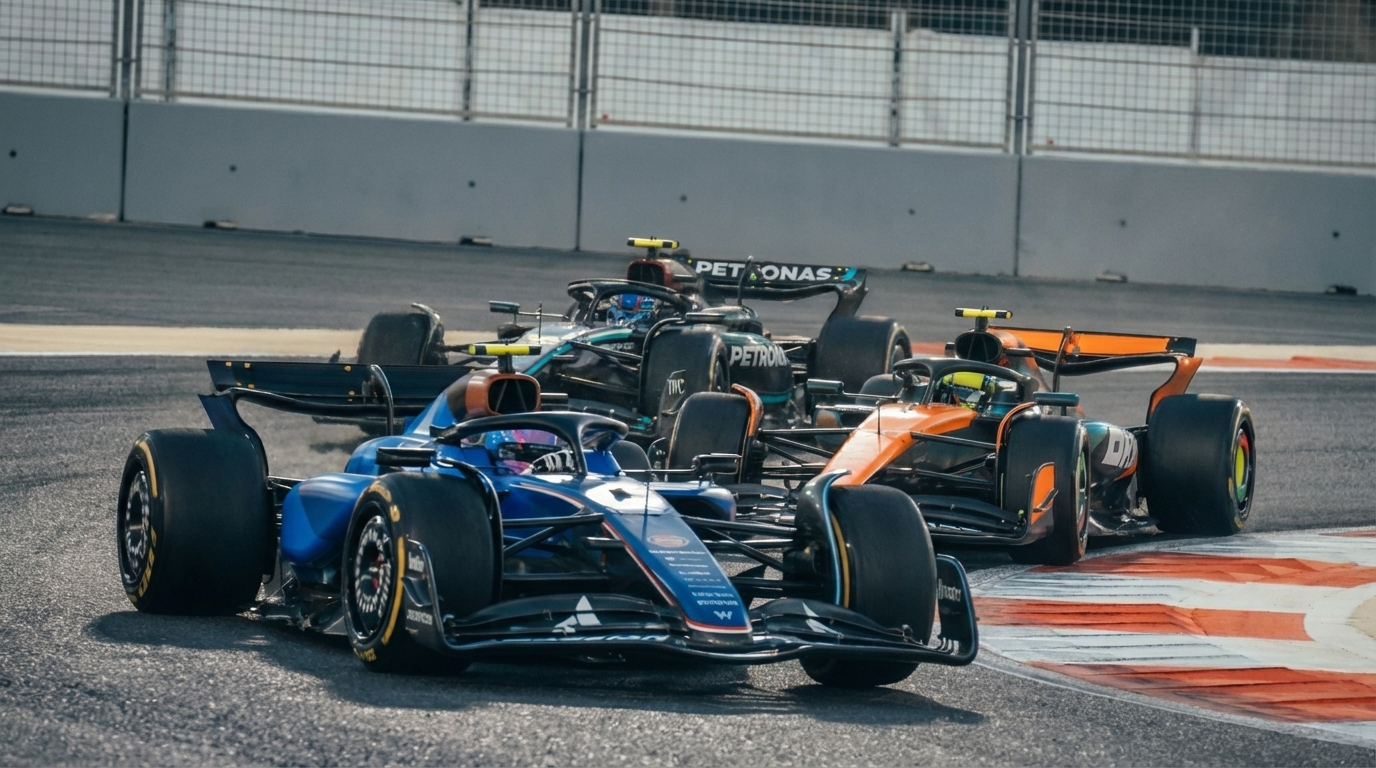
In the quiet after Abu Dhabi, when the last V6s of this era coughed themselves into silence, another sound took over at Brixworth – the relentless whine of dynos running flat-out. Somewhere between that mechanical howl and the hum of boardroom air-conditioning, Mercedes decided its Formula 1 engine empire has grown too big.
Toto Wolff has now put that decision into words. Speaking on F1’s official Beyond the Grid podcast, the Mercedes boss confirmed that the manufacturer intends to cut back its customer engine programme in the next rules cycle, shrinking the number of teams it powers.
“Our current mindset is, also discussing with Ola, that we will reduce the amount of teams we’re going to supply in the next cycle,”
— Toto Wolff, speaking to F1’s official channel, as reported by RaceFans
Right now, Mercedes is the paddock’s power-unit superpower. In 2025 it supplied its own works team plus McLaren, Aston Martin and Williams. For 2026, Aston is off to become Honda’s exclusive partner, but Alpine is stepping in as a new Mercedes customer, with a deal for power units and gearboxes from 2026 to at least 2030.[RaceFans; Formula1.com]
The reshuffle means that when the lights go out on the 2026 season in Melbourne, Mercedes will power four teams again: the works squad, McLaren, Williams and Alpine. That’s 16 complete power units that must be built, signed off and freighted to Australia by early March.[Sportskeeda; Express]
Hywel Thomas, the managing director of Mercedes-AMG High Performance Powertrains, has been frank about what that workload means. More cars means more data, more mileage, more engineers feeding back. But it also means earlier design freezes and a mountain of hardware.
“We’ve shown in the past that having more than one team [means] you’re getting more data… that is very, very beneficial… But the flip of that is we’ve got to make a lot of hardware. We’ve got to… make a few decisions earlier.”
— Hywel Thomas, via RaceFans
This is the tension at the heart of Mercedes’ rethink. The 2026 power units will run on advanced sustainable fuels and rely on a near 50:50 split between internal combustion and electrical power, with battery deployment rising to around 350kW.[Formula1.com; Forbes; Sportskeeda] The technology is complex and the production cycles are long. Every extra customer car drags the development cut-off a little further away from the first race and a little closer to the drawing board.
Wolff’s conclusion is blunt.
He said the optimum number of teams to power is “between two and three, I guess”… “[considering] all of that, going forward, it’s not going to be four anymore.”
— Toto Wolff, Beyond the Grid, quoted by RaceFans and Motorsport Week
Put simply: in the next engine cycle after 2030, Mercedes does not want to be bolting its power units into four different chassis. That’s despite the fact that McLaren, Williams and Alpine have all signed on to use Mercedes engines until at least 2030, giving them security for this rules set but a headache beyond it.[RaceFans; Express]
The strain is already visible in the margins. In an interview with The Race about a hypothetical delay to the 2026 regulations, Wolff explained that Mercedes no longer even has the hardware to keep the current engine formula going for everyone.
“It’s impossible… we don’t have the hardware anymore. We don’t have the dynos, nor the batteries. None of that is existent… I think we could probably make an engine for us as a works team, but the rest is just simply impossible.”
— Toto Wolff, speaking to The Race
That comment was about an emergency scenario, but it shines a light on the strategic dilemma. Supplying almost half the grid was a strength in the early hybrid years; in an era of tighter cost caps, ultra-complex energy systems and long lead times, it risks becoming a liability.
Inside the paddock, the human stakes are obvious. McLaren has just won back‑to‑back constructors’ titles with Mercedes power, and Lando Norris has turned that partnership into a drivers’ crown.[Express; Motorsport Week] Williams, still rebuilding, leaned on its long-standing Mercedes relationship when it chose to stick rather than twist for 2026.[Formula1.com] Alpine, abandoning its Renault works project, has bet its future on being a Mercedes customer through its ‘Hypertech’ reboot.[Formula1.com; The Race]
None of those three teams has been told they are on the chopping block, and Wolff has given no hint as to which contracts might be renewed beyond 2030. But when the man who controls the engines starts talking publicly about cutting at least one customer, everyone in that queue feels the temperature in the motorhome rise a few degrees.
All of this is playing out against the biggest technical reset since 2014. Audi arrives as a full works team, Red Bull and Ford bring an all‑new in‑house power unit, Honda goes all‑in with Aston Martin, and Ferrari continues to power its own cars plus Haas – and soon Cadillac.[Forbes; The Race; Yahoo/BBC] The safety net of “there will always be a Mercedes deal” is thinner than it has been in years.
Wolff, ever the pragmatist, has also warned that customer teams can no longer assume manufacturers can endlessly flex to last‑minute political whims. If the rules move, or if the demands outstrip factory capacity, the first casualties will be the smaller players on the engine roster.
In that sense, Mercedes cutting back is more than a spreadsheet decision. It’s a reminder of how fragile life can be on the grid’s engine-dependent rungs. Somewhere down the line, when the next generation of cars rolls out and the smell of fresh sustainable fuel hangs over a chilly pre-season pit lane, one of today’s Mercedes customers may be running a very different badge on its cam covers – or scrambling not to be left without an engine at all.
For now, though, the dynos in Brixworth keep screaming, the CAD models keep updating, and four sets of engineers – in Brackley, Woking, Grove and Enstone – keep building their futures around the same silver heart. They know that with every lap of 2026, they are not just racing rivals. They are making their case to be the ones Mercedes chooses to carry into the next chapter.
Key Facts
- Toto Wolff says Mercedes will reduce the number of F1 teams it supplies with engines in the next rules cycle, targeting an optimum of “between two and three” customers.
- For 2026, Mercedes will power its works team plus McLaren, Williams and Alpine, requiring 16 complete power units to be ready for the season opener in Melbourne.
- McLaren, Williams and Alpine all have deals to use Mercedes power units until at least 2030, but their longer-term engine futures are now uncertain.
- Mercedes cites long production lead times, design-freeze pressures and hardware capacity as key reasons to shrink its customer roster.
- With Audi, Honda, Ferrari and Red Bull-Ford all active from 2026, Mercedes’ planned cutback reshapes the long-term engine market for several midfield teams.
Sources
- Mercedes will cut number of F1 teams it supplies engines to – Wolff · RaceFans — RaceFans
- Mercedes puts F1 customer teams on notice with bombshell development — Motorsport Week
- Toto Wolff dismisses 'gossip' about Mercedes' 2026 F1 engines with realistic admission — Sportskeeda
- Alpine to use Mercedes power units and gearboxes from 2026 — Formula1.com
- Mercedes to power Williams into new F1 era with engine supply for 2026 regulations — Formula1.com
- What engine every F1 team is using for 2026 rules — The Race
- Three F1 teams would have no engines if 2026 rules scrapped — The Race
- Five Big Changes Coming To Formula 1 In 2026 — Forbes
- Biggest rule change ever and Brit teen - what's new in F1 in 2026? — BBC Sport via Yahoo Sports
- Toto Wolff confirms Mercedes cuts plan that could be blow to Lando Norris amid F1 rumour — Daily Express